

Mistakes are Overrated
A conversation with Mao on journalling, healing, and reconnecting with yourself.
Some healing tools arrive quietly. They don’t announce themselves as life changing. They simply sit with you, night after night, until one day you realise something has shifted.
In this episode of The Cocoon Podcast, I speak with Mao, founder of Mistakes Are Overrated, about how journalling became one of the most grounding and transformative parts of her trauma healing journey.
Mao shares how, during the early years of her healing, she spent countless nights researching, writing, and trying to make sense of what she was feeling. She was looking for answers, structure, and understanding.
What she couldn’t find was a single place that brought everything together in a way that felt safe, accessible, and human.
So, she created it herself.
At the heart of Mao’s work is a deep love for reflective writing. Journalling became a way for her to process trauma when speaking felt too hard. Writing offered distance, clarity, and perspective. Reading her own words back allowed her to hear herself differently, with more compassion and less judgement.
Throughout our conversation, Mao speaks openly about how consistent journalling helped her regulate her emotions, identify triggers, and begin rebuilding trust with herself. Not through big, overwhelming changes, but through small, manageable steps. She was intentional about creating practices that did not feel intimidating, because trauma already disrupts so much.
Healing did not need to become another burden.
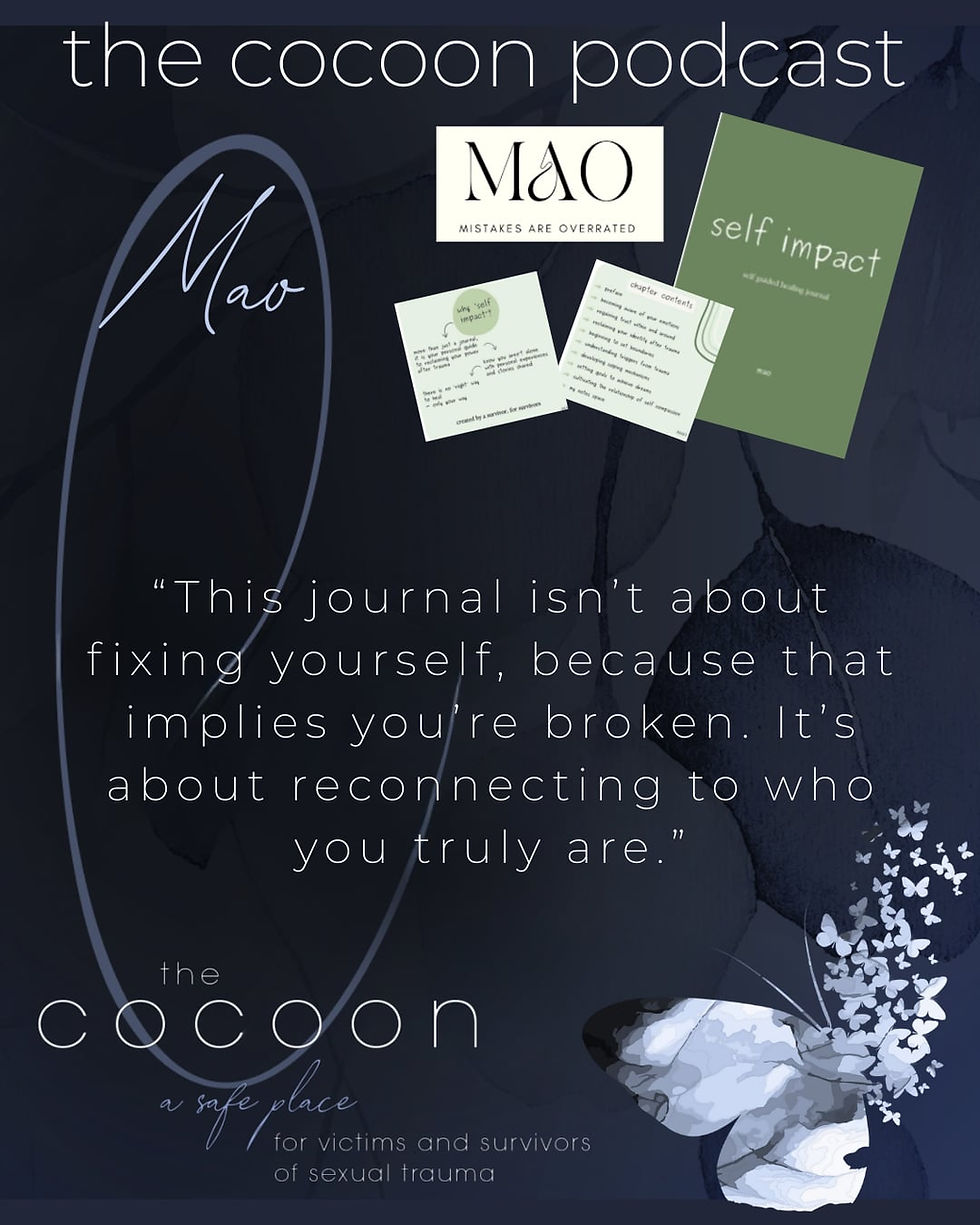
One of the most powerful themes we explored was the idea that journalling is not about fixing yourself.
Mao is clear about this.
The language of “fixing” implies that something is broken. Instead, she speaks about reconnection. Trauma can disconnect us from who we are, from what we enjoy, from what feels true. Journalling becomes a way back to yourself.
Mao’s self-impact journalling book grew directly from her personal journals. The prompts, reflections, and exercises come from lived experience. From nights spent mapping feelings across pages. From learning to trace emotional reactions back to their roots. From recognising how the body responds to triggers to learning to respond with care instead of criticism.
We also spoke about boundaries, gratitude, and baby steps. For Mao, healing had to feel achievable. Gratitude was not about forcing positivity, but about noticing what exists alongside the pain.
The sky.
Nature.
Small comforts.
Anchors that remind us there is more than what hurts.
Journalling, for Mao, also softened her inner critic. Writing created space to move from self judgement to self-compassion. When thoughts were trapped in her head, they looped endlessly. On paper, they could be seen, held, and responded to with kindness, as if speaking to a friend.
This episode is a reminder that healing does not have to be loud or performative.
It can be quiet.
Private.
Messy.
It can include doodles, scribbles, half sentences, or a single word on a page. There is no right way to journal, only your way.
If you are someone who struggles to speak about what you’ve been through, this conversation may resonate deeply.
If you are curious about journalling for mental health, emotional regulation, trauma recovery, or personal growth, Mao’s story offers reassurance that small practices can make a meaningful difference.
As always, please listen in your own time. Pause when you need to. Take what feels supportive and leave the rest.
You don’t need to be fixed.
You deserve to be understood.
And sometimes, that understanding begins with your own words.
Ruby


Comments